The Joinery x Pratt + Larson — The Alameda Coffee Table
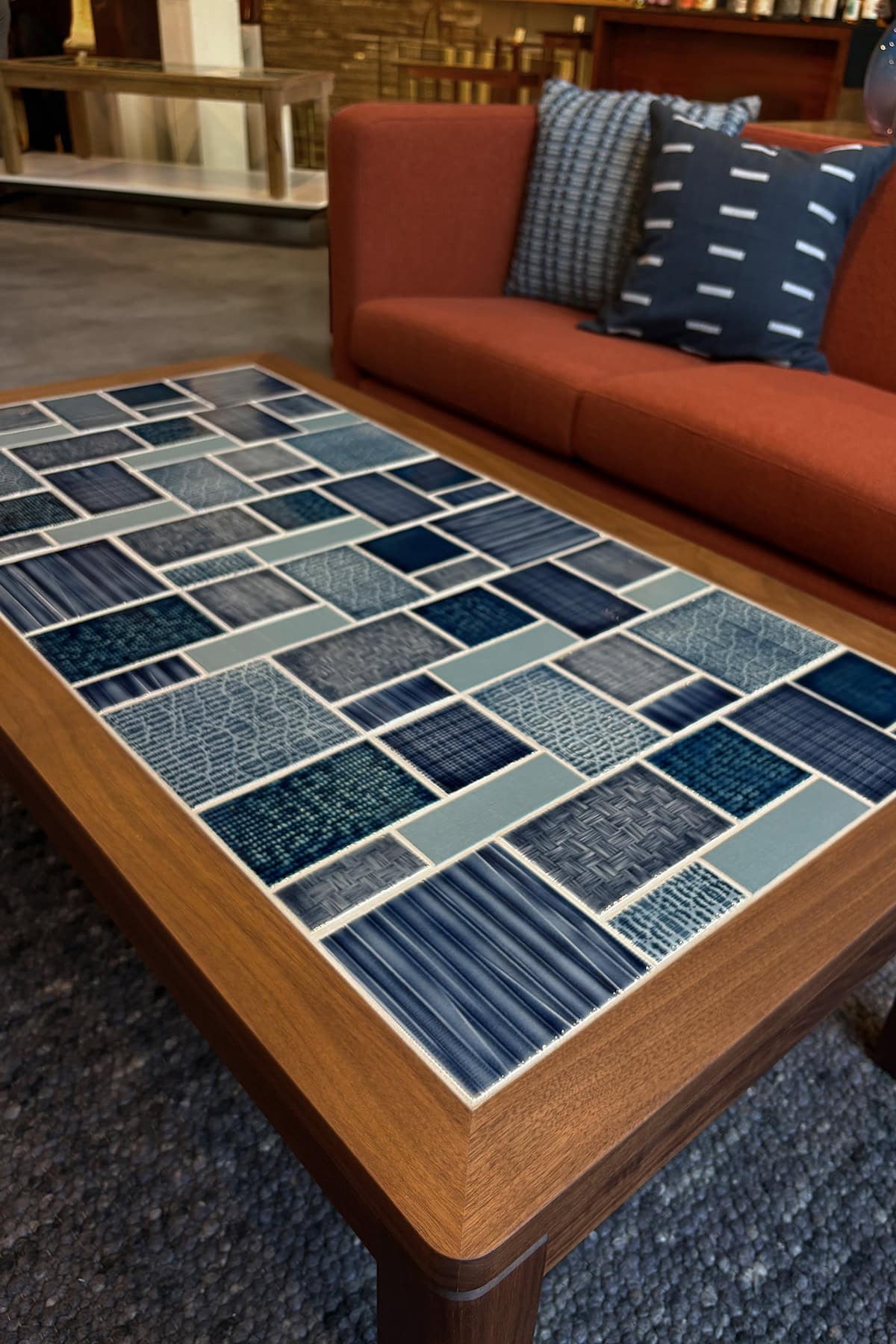
Solid wood and hand-glazed tile, made to live together. The Alameda Coffee Table is a collaboration between two Portland studios, The Joinery and Pratt + Larson. It brings the warmth of hand-selected hardwood and the depth of our handmade tile into a single piece, a study in two crafts finding their balance.
PARTNER
The Joinery
Pratt + Larson
Kindred Studios
Years before we made anything together, our own Belle Iskowitz used to stop at a shop window on Woodstock. It was The Joinery’s old space, where they made the furniture, with cool wooden toys set in the window. She would look in and think how she’d love to own a piece of their work one day.
That quiet admiration says a lot about why this collaboration felt inevitable. The Joinery and Pratt + Larson were both founded in Portland in 1982, both led by their founders for the better part of three decades, and both have since passed to new stewards carrying the craft forward. We make different things from different materials, and we make them the same way, by hand, with care, in a city that still values both.
Our companies are kindred spirits. We both make beautiful products of exceptional quality using natural materials, and both have really strong cultures, with teams of employees who’ve been with us for a long time. That shows we both operate with purpose and care.”
Jon Blumenauer, CEO
The Joinery
The two studios found each other through Portland’s maker community, and the idea came quickly. The Joinery works almost entirely in wood, and tile offered a way to bring color and pattern into a piece. For us, wood offered a home for our tile beyond the wall.
A Table Is Not a Wall
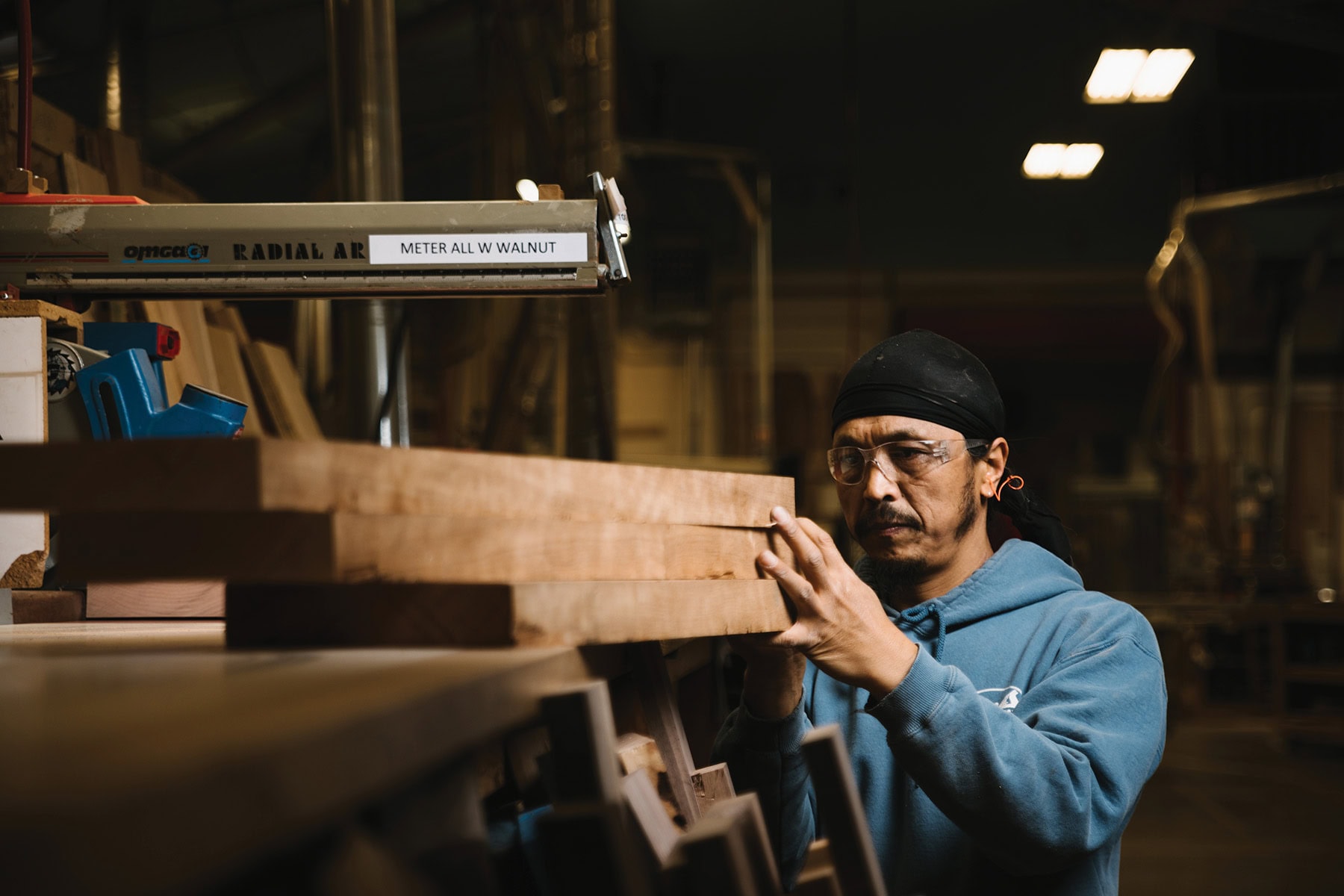
Making it was harder than either of us expected, in the way worth telling. Each studio came in as an expert in its own craft and a newcomer to the other’s. As Belle puts it, that was the first thing to work out.
They’re masters of wood; we’re masters of tile. The first thing we had to decide was where one craft ended and the other began. Everything after that, we solved side by side.
Belle Iskowitz, President
Pratt + Larson
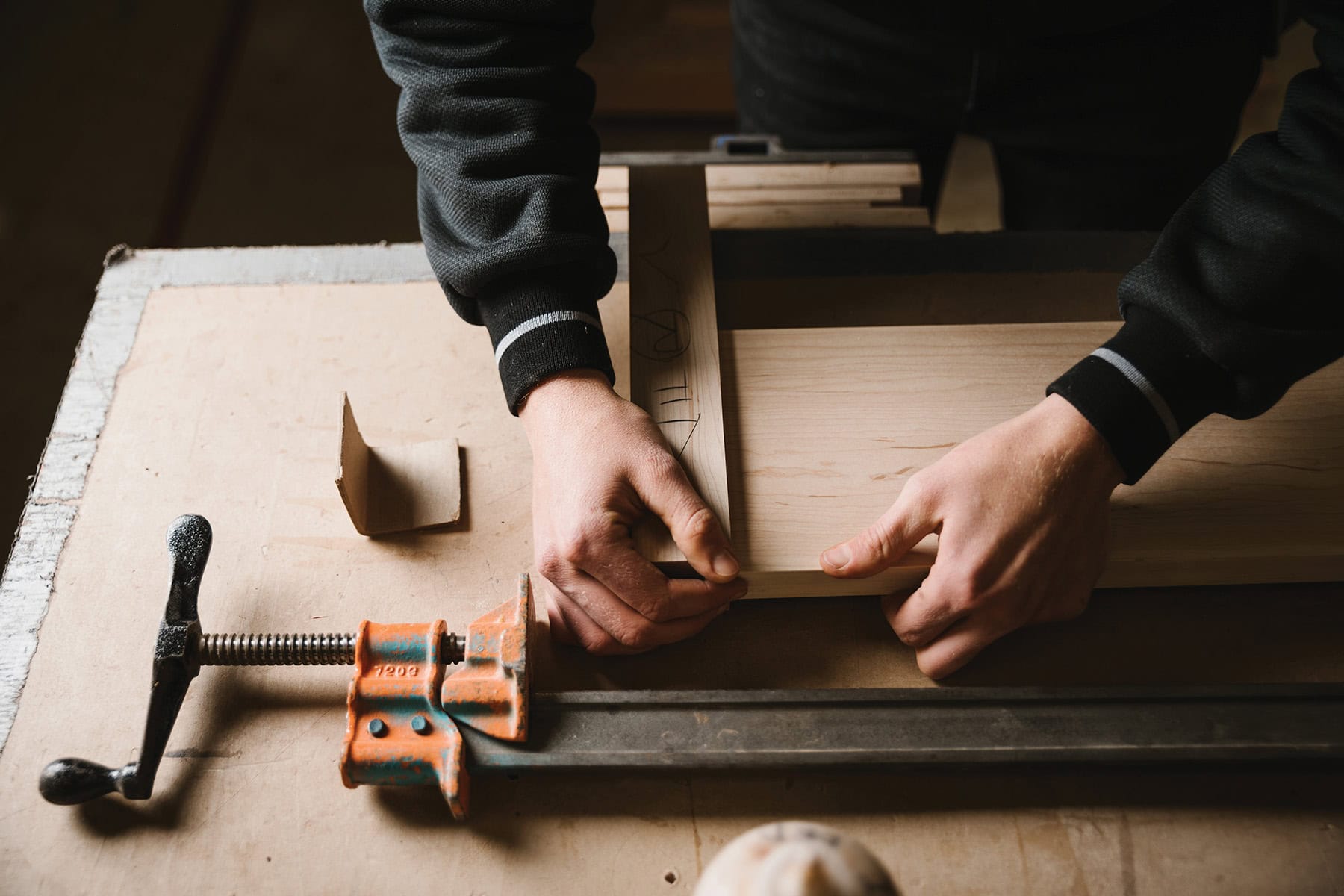
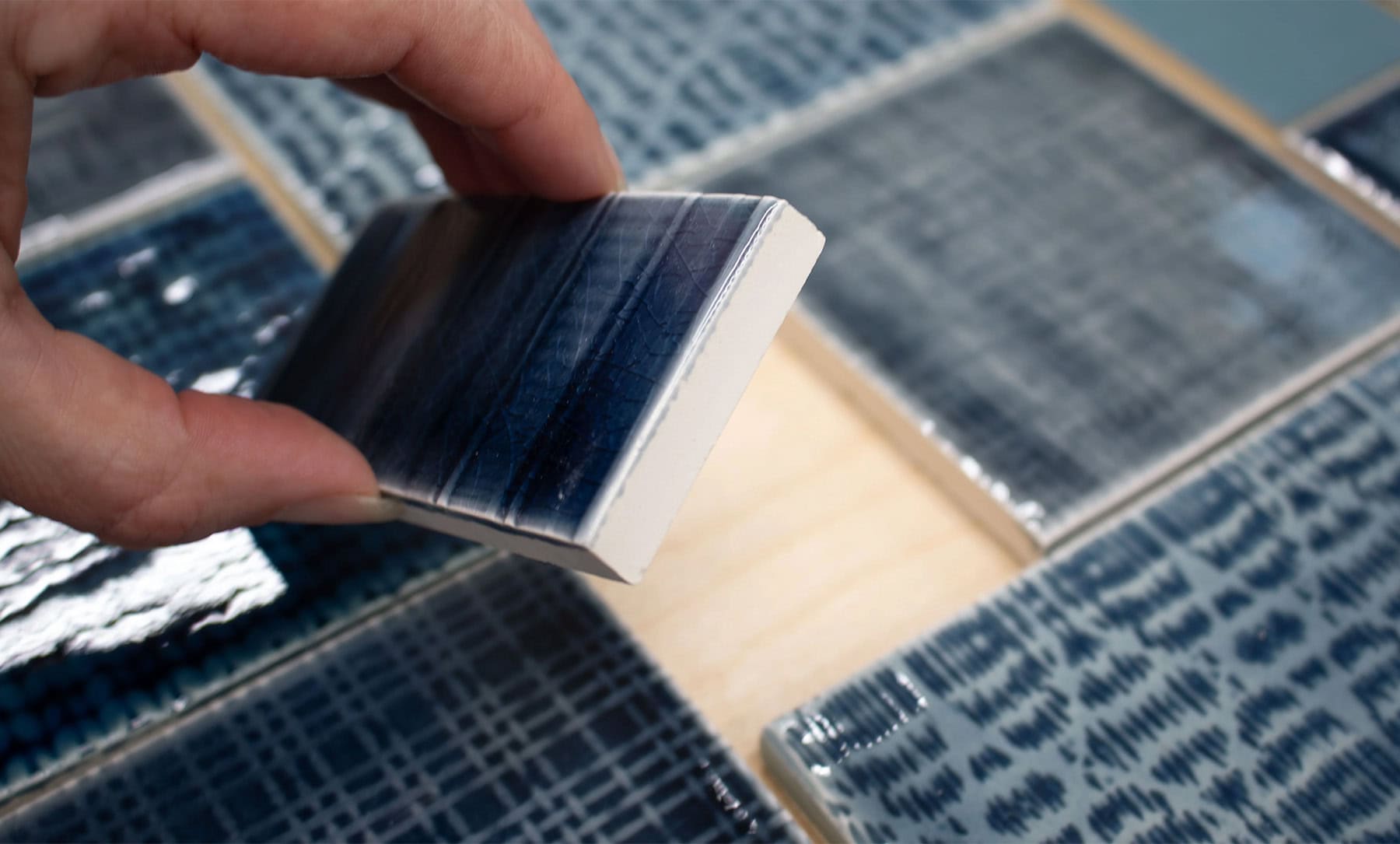
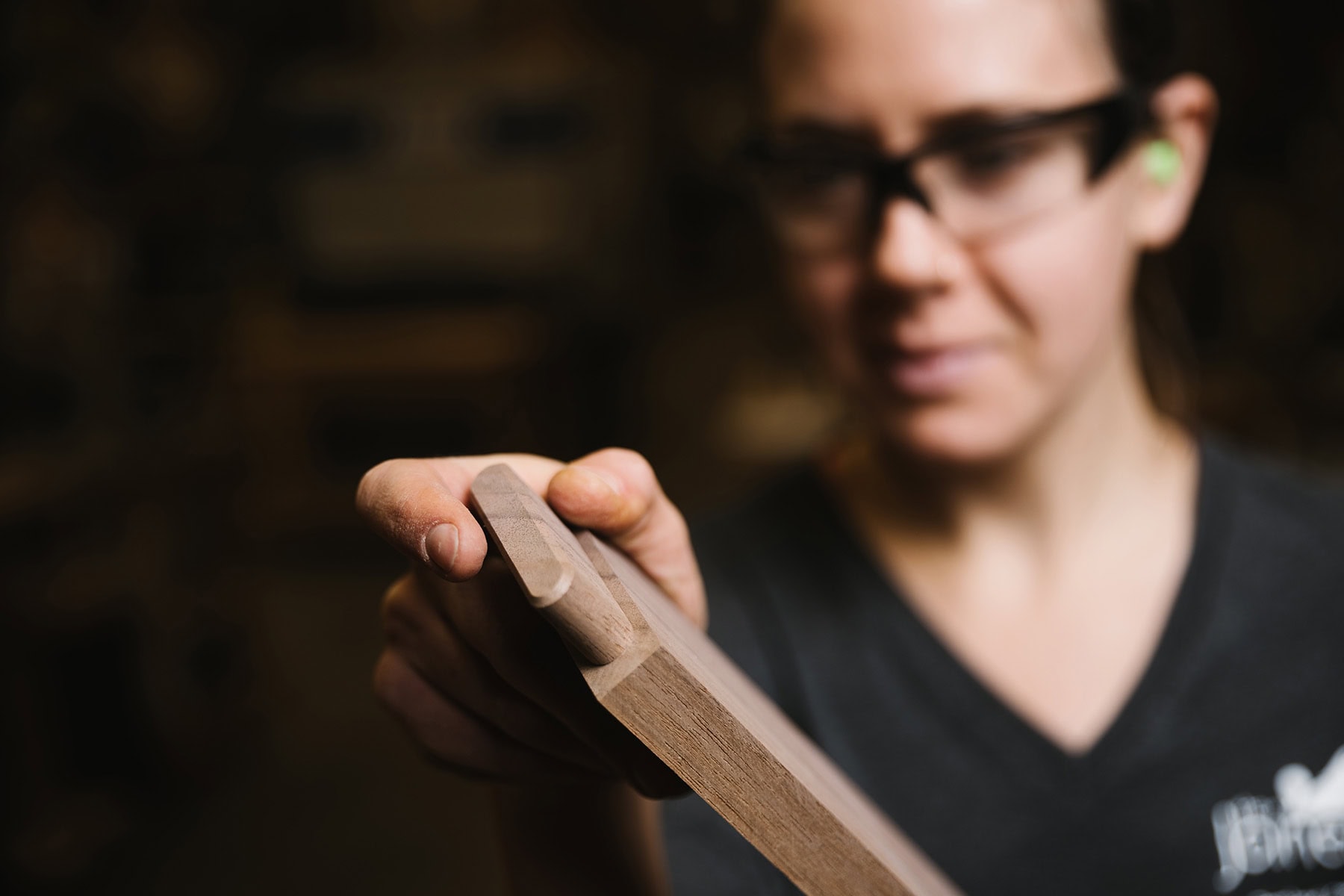
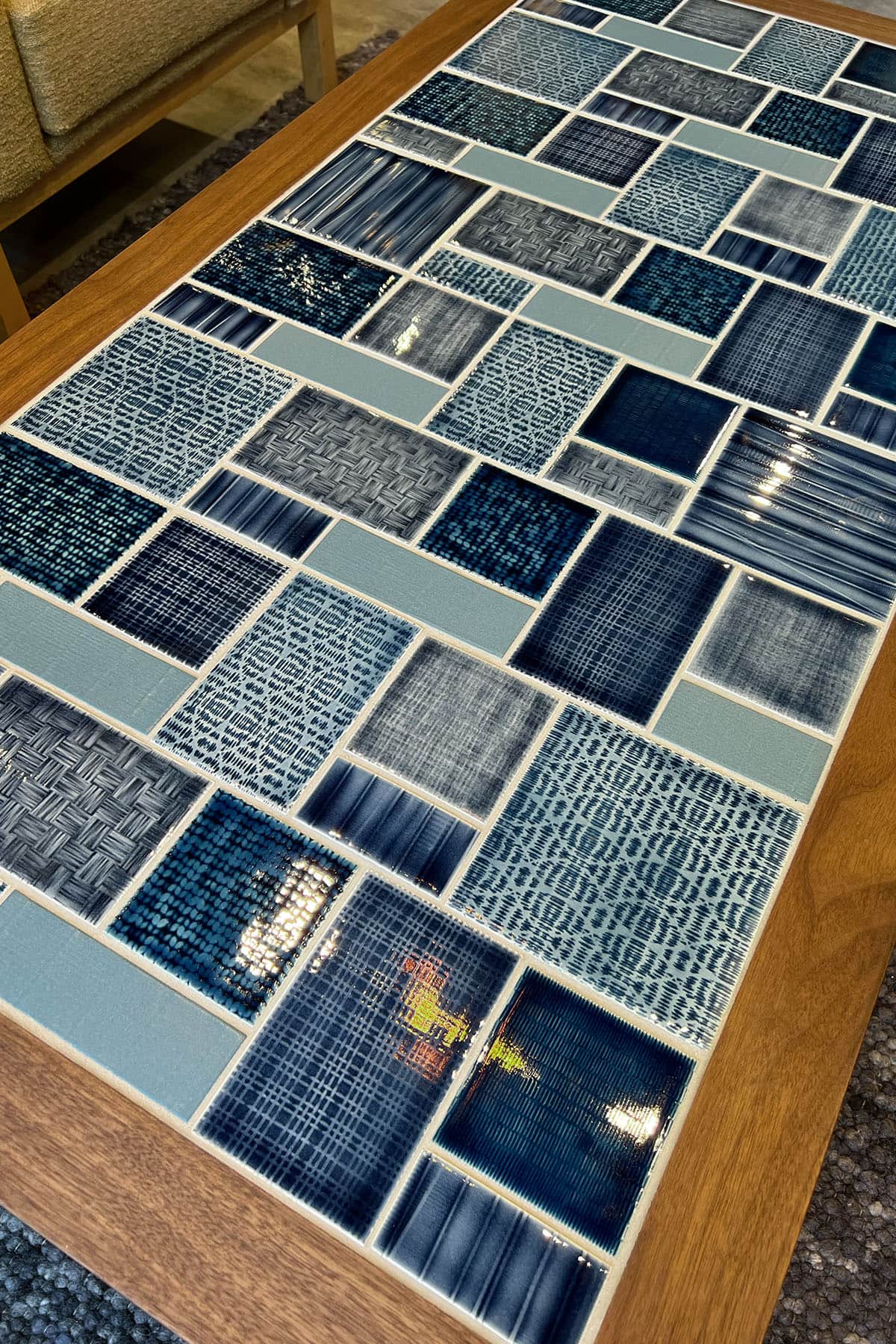
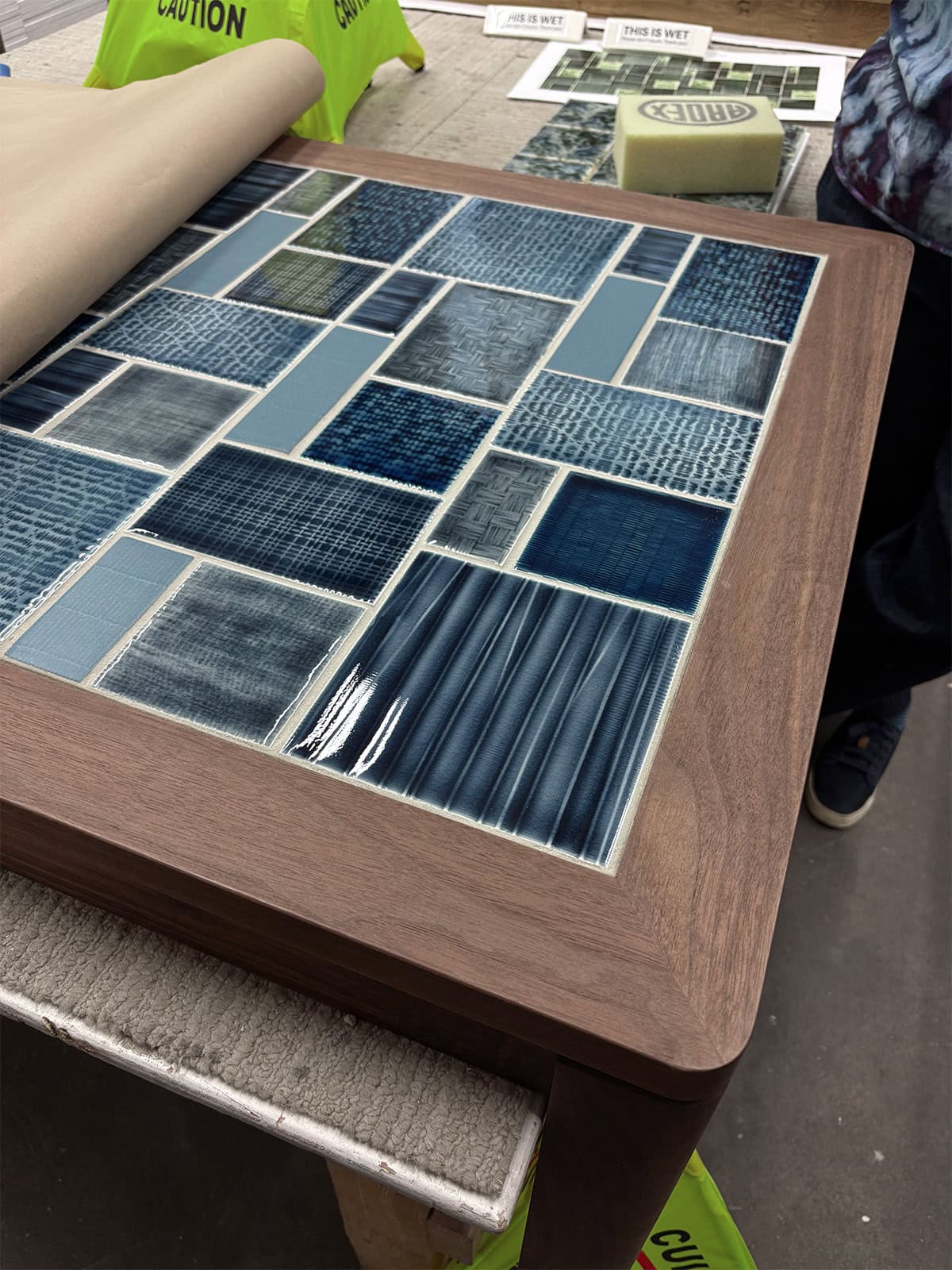
That decision shaped everything: we would set and assemble the tile, and The Joinery would build the frame to receive it. Then came the design challenge. A tabletop is not a wall. When Belle laid out a repeating tile pattern across the surface, it looked like a bathroom wall rather than a piece of art, so she mixed the pieces by hand until the top read as one composed design. The Joinery, meanwhile, built the frame to exact dimensions around each tile layout to ensure that each individual tile was used in its entirety. Every question was solved, hands-on, by both teams together.
Two Materials, One Character
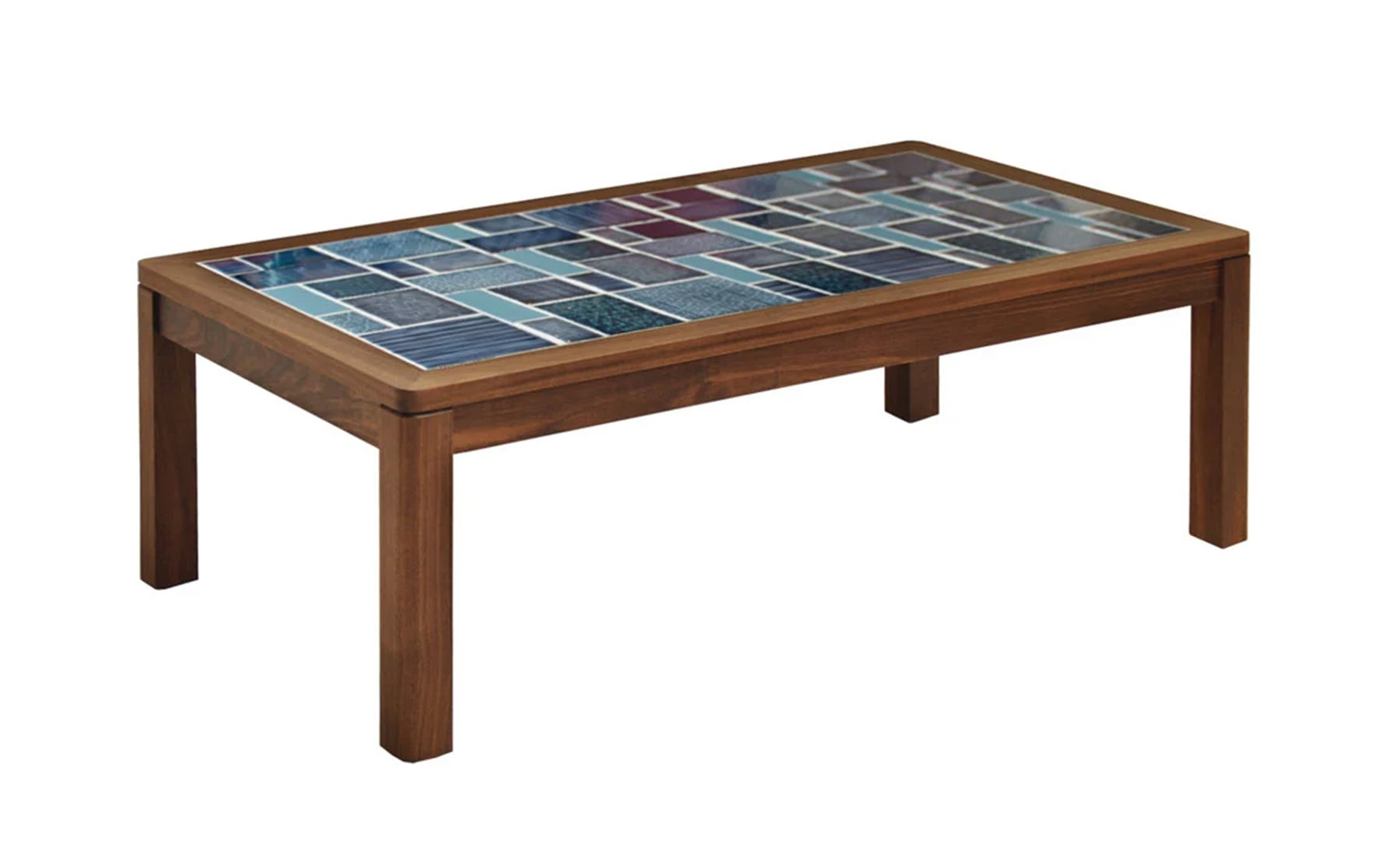
The finished Alameda is a study in contrast held in balance. Against the clean geometry of the tile, The Joinery’s solid wood brings gently rounded edges and the warmth of grain. No two are alike, because both materials make it so. Each hardwood carries its own tone and figure, and our glazes shift and pool differently across every surface. That interplay is where the table comes alive.
Tile, once it is set into a wall or a hearth, stays for good. A coffee table moves. It travels from room to room, house to house, into the next chapter of a life. For a studio whose art usually anchors a space, that is its own small wonder.
Product
Texture
Glaze
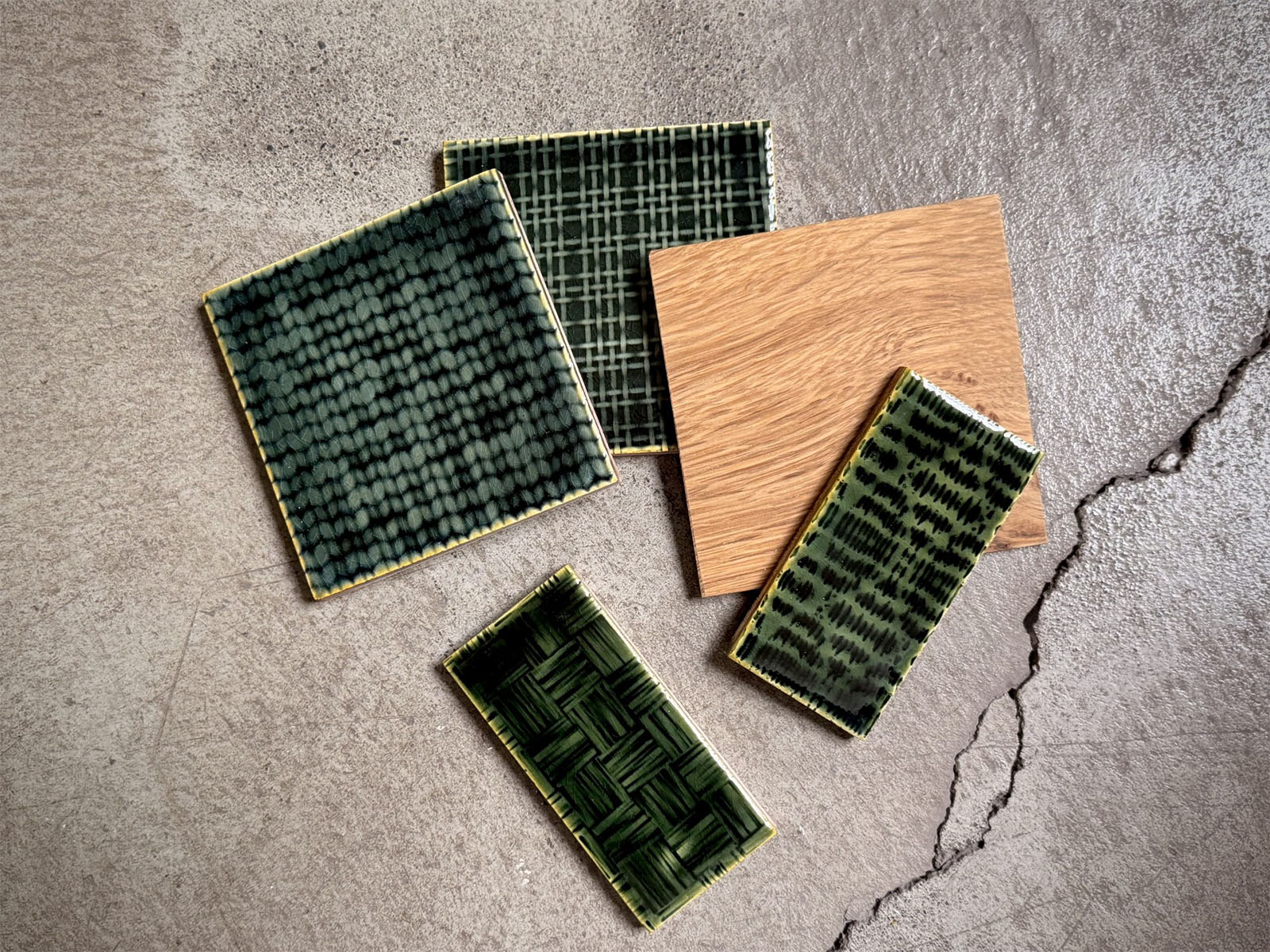
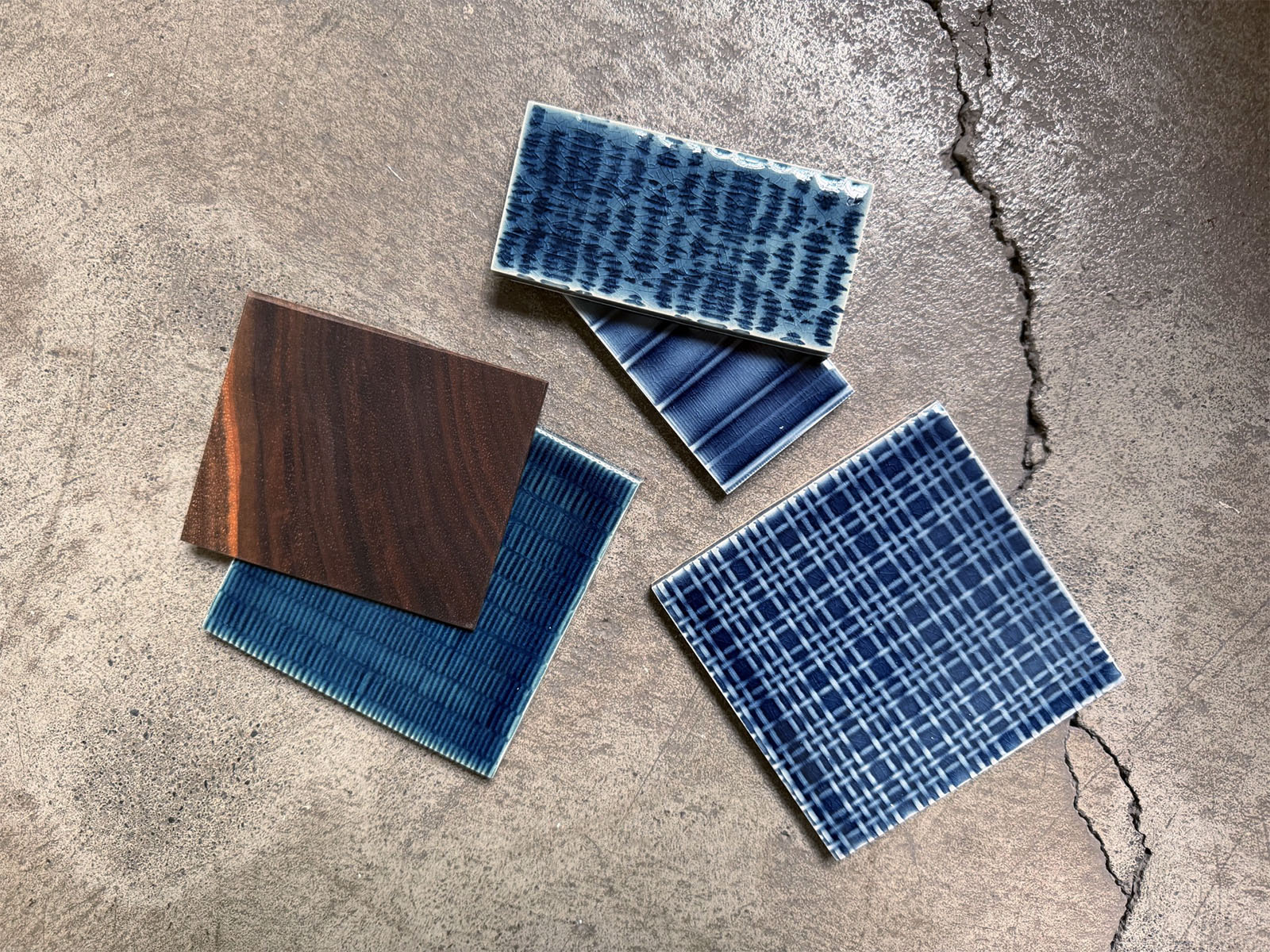
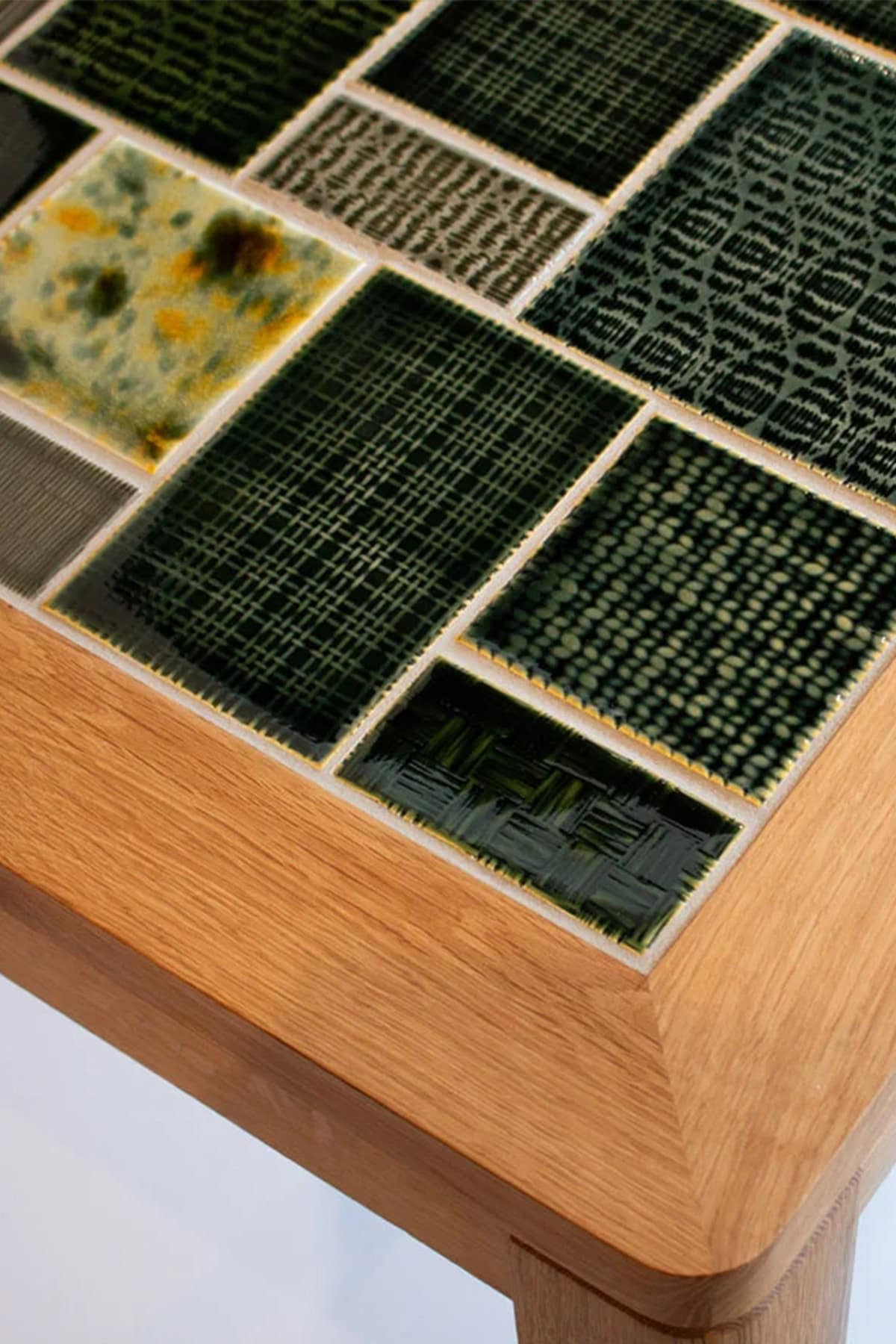
It comes in two colorways, and each has a story. Indigo Blue draws on Japanese boro cloth, indigo textiles pieced from many textures. Midori Green began as a soft Pacific Northwest sage, then grew bolder, deeper emeralds shot through with our Tortoise glazes. A coffee table, Belle reasoned, is not a backsplash, it is the accent and easier to be daring.
Customers want a piece of furniture that tells a story, that means something more, that brings them joy. That is the root of it all.”
Cassandra Jackson, Brand Manager
The Joinery
More to Make Together
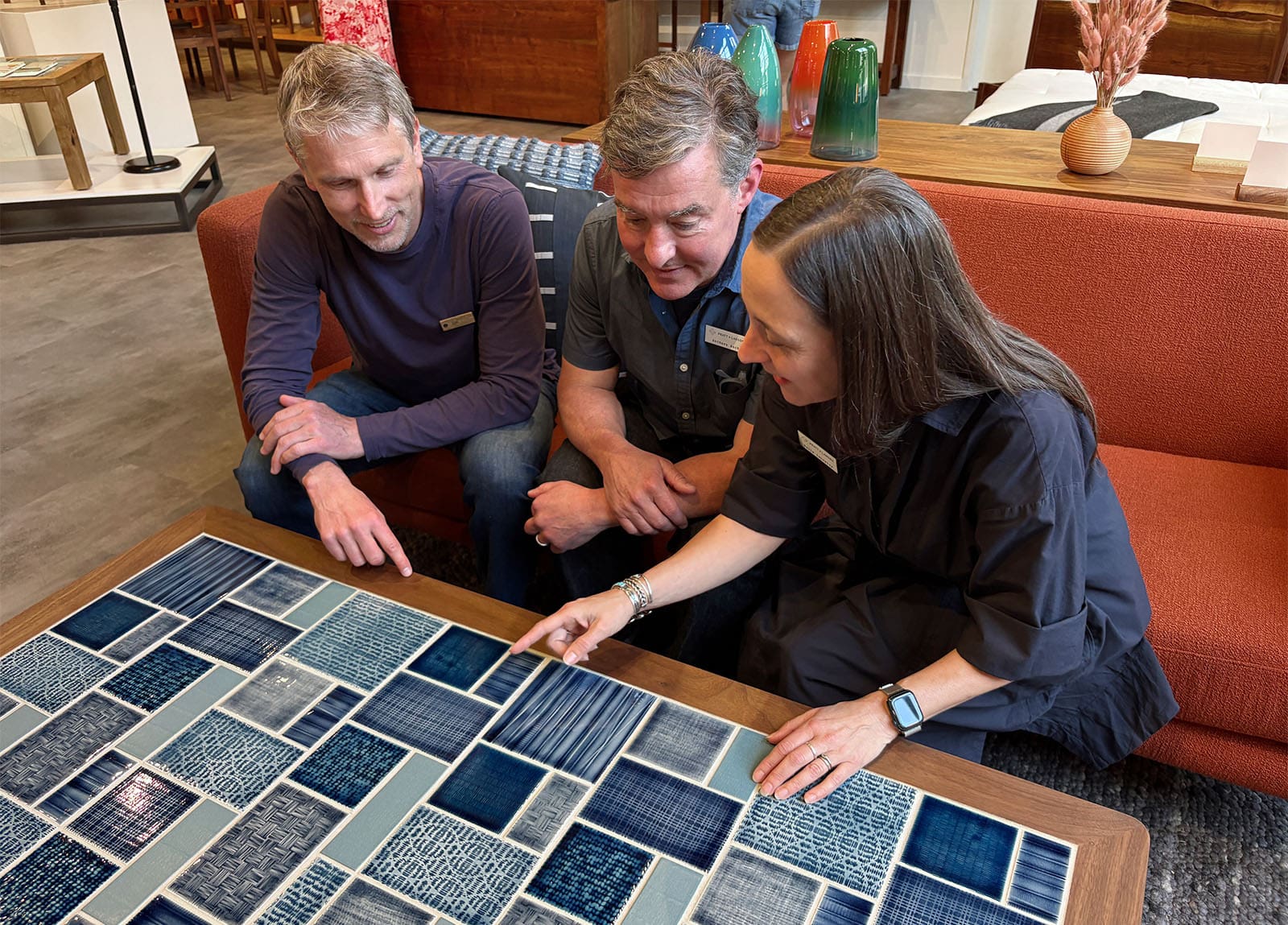
The Alameda has drawn steady attention in The Joinery’s Pearl District showroom, where visitors are captivated by the design up close. What often surprises them is how much can be tailored – beyond the two standard colorways, both the size of the table and the tile itself can be shaped to a space. That flexibility has already opened new conversations, including one with a customer exploring how the design might carry into a nightstand.
For more than forty years, both studios have proved that handmade still matters. Now they say it together, in wood and tile at once.
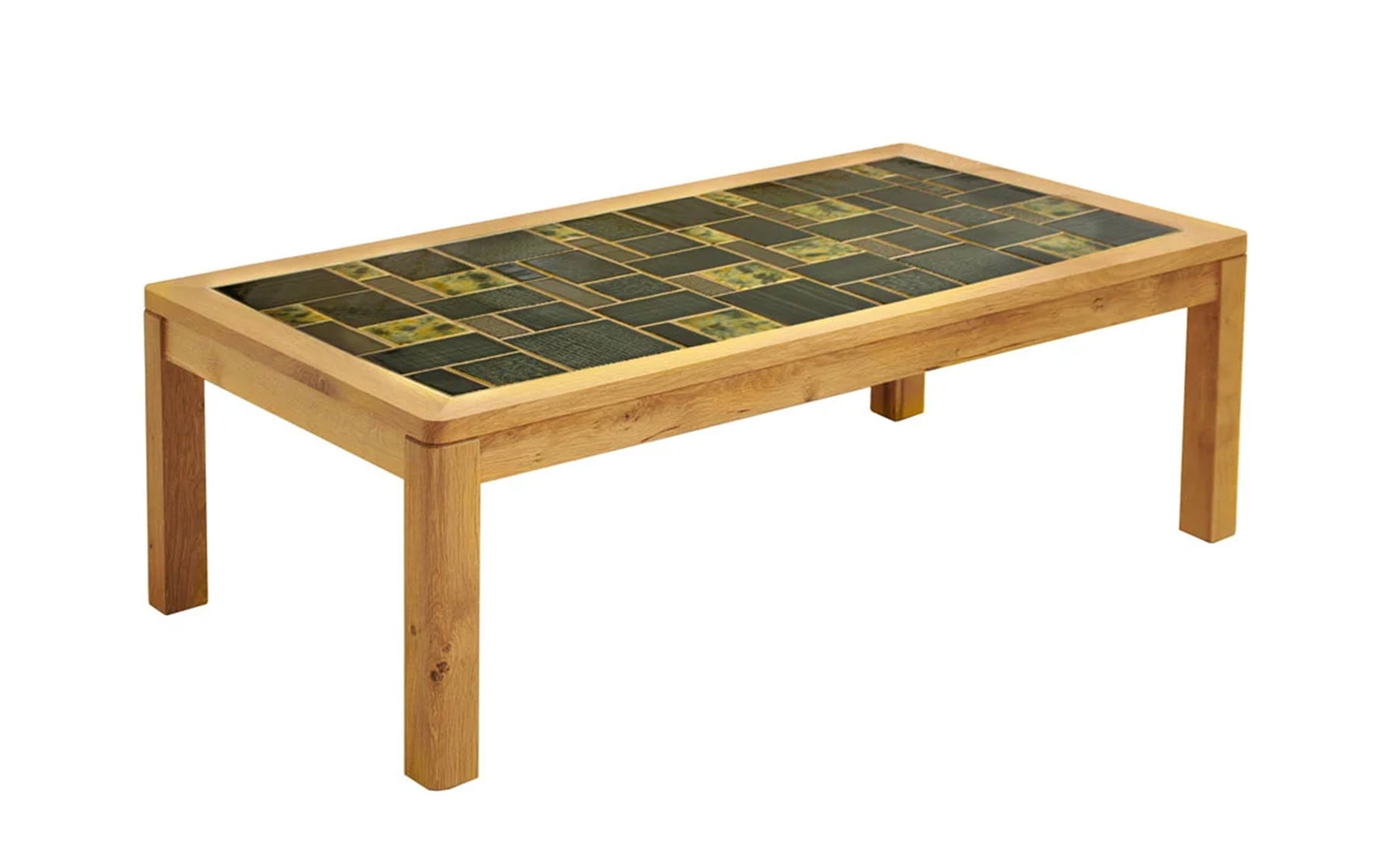

The Alameda
This table is available through The Joinery’s Pearl District showroom and at thejoinery.com, in five wood options (Eastern Walnut, Oregon Oak, Cherry, Maple, and Western Walnut) and two Pratt + Larson colorways, Indigo Blue and Midori Green. Each is built to order.

The Joinery
For over forty years, The Joinery has created handcrafted furniture designed to bring joy and built to last a lifetime. A certified B Corp, The Joinery operates with a deep commitment to its employees, community, and environment. Each piece is designed and built in its Portland woodshop at the foot of the St. Johns Bridge, bears the signature of its builder, and is backed by a lifetime guarantee.